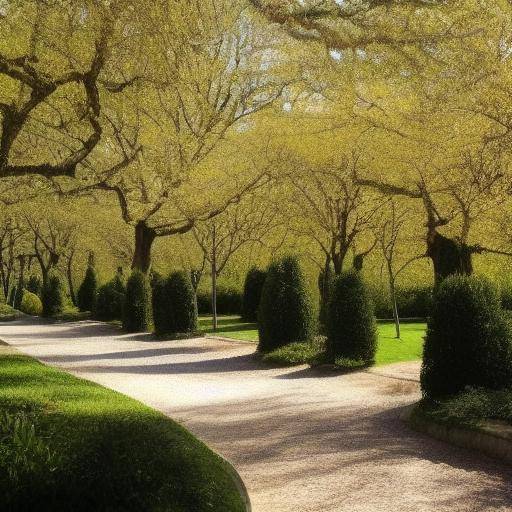

The Japanese gardens are famous for their serene beauty and their profound symbolic meaning. Beyond simply being green spaces, these gardens represent a unique connection between man and nature, loaded with cultural and spiritual meanings. In this article, we will explore in depth the symbolism present in the Japanese gardens, its relation to Japanese culture, and how these elements intertwine to create spaces of beauty and meaning. From its history to its modern impact, this journey will lead us to understand the wealth of the Japanese gardens and the symbolism they enclose.
Introduction
The Japanese gardens, known as "nihon teien", stand out for their timeless beauty and deep symbolism. These gardens, dating back centuries, reflect the influence of Japanese thought and aesthetics, and their value transcends the merely visual. In this article, we will explore the meaning and impact of these gardens on Japanese culture, as well as their projection to the modern world.
History and background
The Japanese gardens have deep historical roots dating back to the very origins of Japanese culture. During the Heian period (794-1185), the first gardens in Japan began to develop and expand, influenced by Chinese aesthetics and the practice of Zen Buddhism. The connection between natural beauty and spirituality became an essential aspect of these gardens, which was reflected in their design.
The Japanese gardens evolved over different historical periods, taking influences from various artistic and philosophical tendencies. During the Edo period (1603-1868), natural beauty and harmony became key elements of the gardens, and a distinctive aesthetic was developed that sought to replicate nature ideally.
In-depth analysis
Symbolism in the Japanese gardens goes beyond merely aesthetic. Each element of the garden, from the layout of the rocks to the choice of the plants, carries a particular meaning. For example, the use of rocks and sand can represent mountains and rivers, while bridges symbolize transition and change. Even the sound of water and the arrangement of trees are designed for a symbolic purpose, seeking to generate a sense of harmony and balance.
The art of creating and appreciating these gardens is not limited to mere contemplation; many Japanese gardens are designed to be traveled, experienced and reflected. In this way, the symbolism present in them invites contemplation, introspection and connection with nature, central elements in Japanese culture.
Comprehensive review
The Japanese gardens represent a living testimony of Japan's rich tradition and spirituality. Over the centuries, they have maintained their relevance and continue to fascinate people from around the world. Its influence has expanded beyond Japan, inspiring garden designs in different cultures and contexts. This phenomenon realizes the universality of its message and its ability to transcend borders.
Comparative analysis
By comparing the Japanese gardens with other cultural manifestations, his unique approach is emphasized in connection with nature and intrinsic symbolism. Unlike the Western formal gardens, the Japanese gardens seek to integrate nature into its purest form, thus creating a space that invites the introspection and contemplation of beauty in its simplest state.
Practical advice and useful advice
If you are looking to create a garden inspired by Japanese aesthetics, consider incorporating symbolic elements that reflect harmony and balance. The choice of native plants and the careful arrangement of rocks and water can help to convey the fundamental principles of Japanese gardens in your own green space.
Industry perceptions and expert opinions
Experts in landscaping and garden design recognize the importance of symbolism in the Japanese gardens and its potential to evoke deep emotions in those who experience them. The incorporation of symbolic elements in the design of green spaces has proved to be a growing trend in the field of landscapes, as it resonates with the search for meaning and connection with nature in today's society.
Case studies and practical applications
Currently, the principles of symbolism in the Japanese gardens are applied in various scenarios, from public gardens to designs of urban spaces. These spaces have proved to be meeting points for the community, generating a sense of calm and serenity in densely populated urban environments. The benefits of integrating symbolic elements into the design of green spaces are evident not only in their visual appeal, but also in their positive impact on people's emotional well-being.
Future trends and predictions
It is anticipated that symbolism in the Japanese gardens will continue to influence the design of green spaces in the future. With a renewed focus on sustainability and the connection with nature, the symbolic principles of these gardens can provide valuable insights to address contemporary challenges in landscape design.
Conclusion
In conclusion, the Japanese gardens stand out for their deep symbolism, which goes beyond aesthetic mere and represents a significant connection with nature and spirituality. Its influence endures over time, transcending borders and cultivating an appreciation renewed by subtle beauty and harmony. By understanding symbolism in the Japanese gardens, we can appreciate not only its aesthetic value, but also its ability to inspire reflection, serenity and connection with our natural environment.
Frequently asked questions
What is the meaning of the most common elements in a Japanese garden?
Common elements such as rocks, water, moss and trees have deep symbolic meanings in the Japanese gardens. For example, rocks can represent islands or mountains, while water symbolizes purity and fluidity. These elements are carefully combined to create a landscape that invites contemplation and serenity.
How can the symbolism of Japanese gardens be incorporated into a personal outer space?
The incorporation of Japanese symbolism in a personal garden can be achieved by selecting native plants, incorporating elements such as stones or sand to represent nature, and creating spaces of serenity and contemplation, such as small ponds or zigzagging trails.
What role do Japanese gardens play in Japanese culture and spirituality?
The Japanese gardens have traditionally been spaces for meditation and contemplation in Japanese culture, connecting people with nature and promoting serenity. They are also used in religious settings, such as temples and shrines, to promote reflection and inner peace.
What challenges do you face when creating and maintaining a Japanese garden?
Some challenges include the meticulous maintenance of garden elements, such as moss and special plants, and the creation of an adequate balance between the elements to convey the desired symbolism. In addition, adapting a Japanese garden design to different climates and environments can present unique challenges.
What is the difference between a traditional Japanese garden and a contemporary one?
A traditional Japanese garden follows the principles established throughout centuries of history, with a careful disposition of elements and an emphasis on symbolism and harmony. In contrast, a contemporary Japanese garden can reinterpret these principles in a more creative way, integrating modern elements and innovative design techniques, without losing sight of the essence of symbolism and the connection with nature.
How does symbolism influence Japanese gardens in interior architecture and design?
The symbolism present in the Japanese gardens has influenced interior architecture and design, fostering an appreciation for simplicity, harmony and connection with nature. Elements such as natural lighting, the integration of outdoor landscapes and the use of natural materials reflect the influence of Japanese symbolism in these areas.
In short, the beauty of the Japanese gardens is nourished by its deep symbolism, which transcends the aesthetic to offer a contemplative and spiritual experience. Its lasting influence on contemporary culture and design, providing a legacy of harmony and connection with nature that extends through time and borders. By exploring symbolism in these gardens, we can discover a world of meaning and beauty that enriches our understanding of the relationship between human beings and their natural environment.