
Catalan art has been shaped over the centuries by different artistic trends, but none has left such a profound impact as modernism. In this article, we will explore how this revolutionary artistic current influenced art in Catalonia, its history, the key figures, its impact on society, and its relevance today.
Introduction
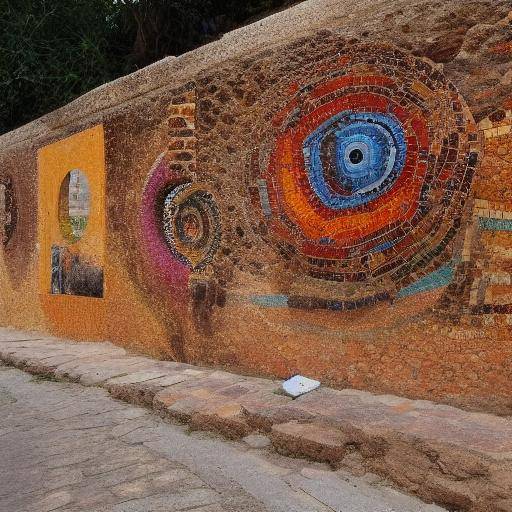
Catalan modernist art has been a fertile ground for creativity and innovation. His artists, architects and designers sought to free themselves from academic conventions, exploring new forms of expression through nature, curved lines and floral motifs. This movement played a crucial role in the cultural and artistic development of Catalonia, leaving a lasting legacy that transcends the borders of time and space. Join us on this journey to discover the richness and meaning of modernism in Catalan art.
History and Background
Modernism in Catalonia found its starting point in the late nineteenth century, coinciding with a period of economic and cultural renewal in the region. Pyonera figures such as Antoni Gaudí, known for his emblematic masterpiece, the Sagrada Familia, and Lluís Domènech i Montaner, whose Hospital de la Santa Creu i Sant Pau is a paradigm of modernist architecture, led this movement that embraced creative freedom, the fusion of natural elements and the experimentation with new techniques and materials.
Modernism did not limit itself to the architectural sphere, but imposed all forms of artistic expression, from sculpture and painting to interior design and craftsmanship. This period of artistic ferment represents a reaction to industrialization and an attempt to preserve the Catalan cultural identity, combining traditional elements with an avant-garde and cosmopolitan approach.
Deep analysis
Catalan modernism transcended borders, becoming a cultural phenomenon that impacted society, politics and the economy. Its innovative and imaginative designs captured international attention, consolidating Catalonia as a benchmark in the world's artistic and architectural landscape.
Despite its apogee in the nineteenth and early twentieth century, modernism continues to inspire contemporary artists and designers. Its legacy persists in architecture, furniture design, jewelry and other artistic manifestations, enriching the cultural heritage of Catalonia and attracting avid visitors to admire these masterpieces.
Comprehensive review
Modernism, art and Catalonia are intrinsically intertwined, feeding and mutually enriching their creative expression. This symbiosis is reflected in the profusion of modernist buildings scattered throughout the region, enriching its urban landscape and offering a unique aesthetic experience to its inhabitants and visitors.
Modernist art in Catalonia is constantly reinvented, inspiring new generations to explore their creativity and to challenge the traditional limits of artistic expression. Modernism is not only part of the past of Catalonia, but it is also a vital element in the configuration of its cultural identity and its projection towards the future.
Comparative analysis
Modernism, art and Catalonia share an intertwined history, where creativity, identity and innovation merge in a unique way. Catalan modernism is distinguished by its approach to nature, its ornamental aesthetics and the integration of symbolic elements that reflect local culture.
Practical Tips and Accessible Tips
To fully appreciate the impact of modernism on Catalan art, it is recommended to explore the masterpieces of Antoni Gaudí, Lluís Domènech i Montaner and other modernist architects, visiting emblematic buildings such as the Sagrada Familia, the Güell Park, the Palau de la Música Catalana and the Hospital de la Santa Creu i Sant Pau. In addition, diving into the neighborhoods of Barcelona and other Catalan cities to admire the rich modernist heritage is a unique experience that allows a deeper understanding of its influence on Catalan art.
Industry Perspectives and Expert Reviews
The experts in art and architecture recognize the invaluable value of modernism in the Catalan context, highlighting its contribution to cultural diversity and the international projection of Catalonia as a world-renowned artistic destination. Their views reflect the importance of preserving and promoting this artistic legacy for future generations.
Case Studies and Practical Applications
The practical applications of modernism in Catalan art extend beyond the cultural sphere, affecting tourism, urban development and the promotion of regional identity. Detailed case studies illustrate how modernism has impacted the economy and the promotion of tourist destinations, attracting visitors from around the world and generating a positive impact in the region.
Future Trends and Predictions
Future trends in Catalan art indicate a continuous recognition and appreciation of modernism, with an emphasis on the preservation of modernist heritage, the integration of new technologies in its study and conservation, and the promotion of contemporary creativity inspired by this pioneering artistic current.
Conclusions
Modernism has left an imprint on Catalan art, transcending the temporal and geographical borders to perpetuate its influence today. Catalonia is proud of its modernist legacy, whose impact continues to resonate in its cultural landscape and at the heart of those who seek to understand and appreciate this inimitable artistic expression.
Frequently asked questions
What are the main exponents of Catalan modernism in art?
Catalan modernism has prominent exponents, including Antoni Gaudí, Lluís Domènech i Montaner, Josep Puig i Cadafalch and other architects, sculptors and designers who left an invaluable legacy in Catalan art.
What is the relationship between modernism and Catalan cultural identity?
Modernism contributed to the redefinition and promotion of Catalan cultural identity, serving as a means of affirming the uniqueness of the region and its rich artistic heritage.
How has the perception of modernism in Catalonia evolved over time?
The perception of modernism has changed from being a controversial current to being widely celebrated, recognized as an invaluable cultural heritage that has enriched Catalan art and the experience of its inhabitants and visitors.
Why is modernism still relevant today?
Modernism remains relevant because of its lasting impact on the cultural identity of Catalonia, its influence on tourism and the international projection of the region, and its ability to inspire contemporary creativity.
What are the current challenges for the preservation and promotion of modernism in Catalan art?
The challenges include the conservation of modernist works, the management of cultural tourism, the research and dissemination of its legacy, and the integration of new perspectives into its study and appreciation.
Where can we appreciate the main works of modernism in Catalonia?
The main modernist works are in Barcelona, including the Sagrada Familia, the Güell Park and numerous residences and public buildings. Other Catalan cities such as Reus, Terrassa and Palma de Mallorca also feature outstanding examples of modernism.
With this article, we have explored the essence of modernism in Catalan art, its lasting impact and its continuing influence today. Catalan modernism, with its fusion of tradition and avant-garde, has transcended the temporal limitations, becoming a lasting emblem of the creative spirit of Catalonia.
Remember that these frequent questions are just a sample of the themes and concepts that modernism encompasses Catalan art, and we encourage readers to immerse themselves in this fascinating artistic current to discover its wealth and complexity.
We hope that this exploration of modernism in Catalan art has been informative and enriching!