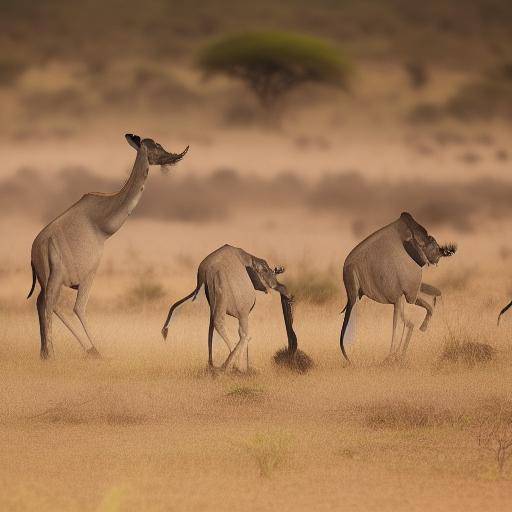
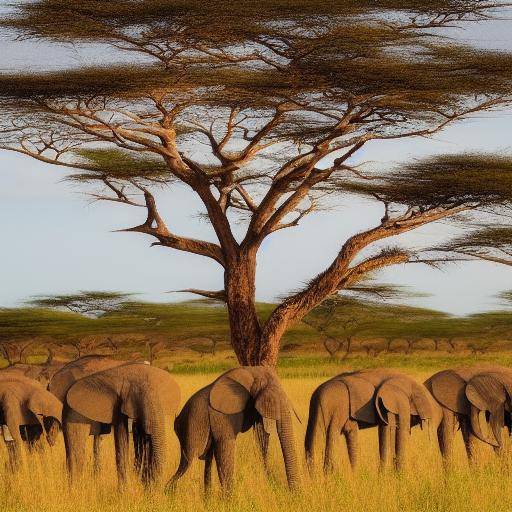
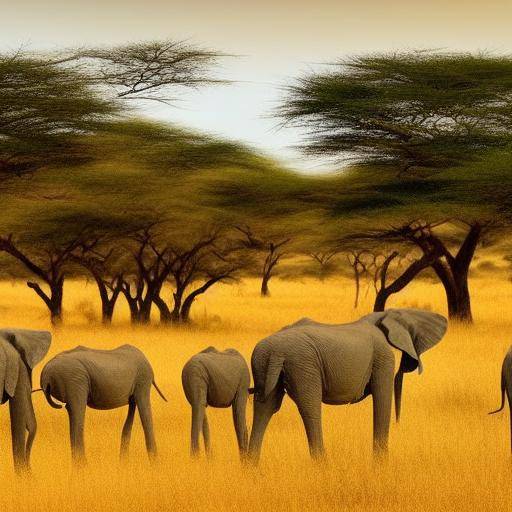
The wildebeest migration is not a parade with a set start time. It is a circuit of herds looking for fresh grass between the Serengeti, in Tanzania, and the Masai Mara reserve, in south-western Kenya. If you are travelling for that adventure, choose your camp by the rhythm of the animals, not by a fixed calendar.
The border does not act as a wall. Wildebeest, zebras and gazelles cross it when the northern grazing is worth the risk. You can decide what kind of stay you want, not what the week's sightings report will say: sometimes the main mass stays in Tanzania. What does depend on you is sleeping in a single sector and going with someone who knows the tracks.
Why the wildebeest migration reaches the Masai Mara
Wildebeest come to the Masai Mara because they eat short grass and drink where there is still water. In the southern Serengeti the rains leave tender pasture, and that is where the calves are born. When that ground dries out, the food lies further north. The reserve sits in that dry stretch: its plains still feed the herds and the Mara River is the last big obstacle. It is one leg of the journey, not the start or the finish.
If you come in the first part of the year, the large groups are usually still far to the south. The reserve does not empty: some wildlife lives here all year round. What may be missing is the column you came to follow. Choosing the place by its name, without asking where the grass is that season, is the most common timing mistake.
Nor does the same mass always arrive. In some years the bulk stays in northern Tanzania and only smaller groups come in here. No lodge can promise otherwise. It can tell you what has been seen over the previous days, and that answer is worth more than the month written in your plan.
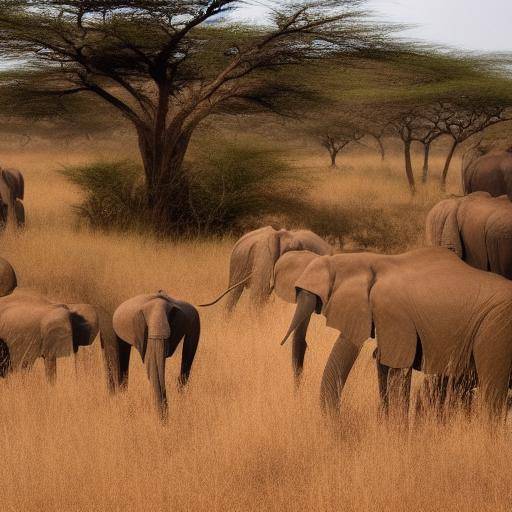
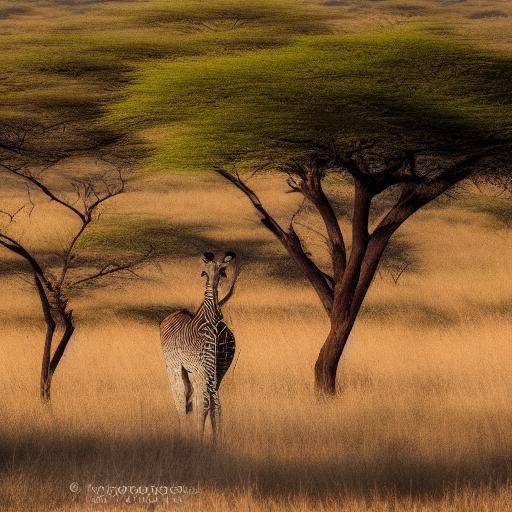
They usually travel mixed with plains zebras and gazelles. The reserve also has wildebeest that do not make the big circuit: a handful beside the track does not prove the column has crossed. Where so much prey gathers, lions, hyenas, cheetahs and leopards move in; in the water, crocodiles. Your route starts where the grass is that week, not at a famous crossing point. You are watching animals move to feed, not a leap staged on demand.
How the circuit moves through the year
Do not plan the trip as if the wildebeest had an appointment in Kenya. They follow the grass, and the grass shifts. In the first part of the year the births are concentrated in the southern Serengeti, on short pasture. At that time, the Masai Mara usually keeps only the animals that live here all year. Ask what has been seen that week before picturing a column on the track.
When the south dries out, the herds move through the interior and along the western corridor, still in Tanzania. The Grumeti River is usually a passage, not the end point. The reserve really comes into play when the north has more food than the south. Until that shift, sleeping beside the Mara may leave you with a still plain and a lot of driving.
The big presence coincides with the dry season in the second half of the year, not with a marked date. The rains bring the passage forward or hold it back, and the return south usually comes with the short rains. At the edges of that season you may catch the arrival or the departure. Trust the reports from the previous days and use the month only as a reference.
Inside the reserve there is no fixed corner either. The column may be near the border, in the centre, towards the north or on the western bank, depending on that week's water and grass. Pick the sector based on those reports and stay put. Changing camp mid-stay costs you the morning, which is when you can tell whether they are moving forward or have gone.
If your dates fall outside that dry stretch, say so when you book. The predators and the resident wildebeest still justify the nights. You are coming to see the reserve, not a guaranteed week of great herds.
Routes to follow the herds
Do not tour the reserve like a checklist of gates. One base and little driving each day works better than linking the south and the north on the same day. Each of the four areas suits a different moment of the herds' journey, so pick where to sleep by what the animals are doing rather than treating them as compulsory stages.
The south, near the border, fits when the columns come in from Tanzania or linger before heading back. The Sand River area shortens the drive. It also fills up. Arriving early is not about rushing: it is about not adding one more vehicle to an already crowded riverbank.
The centre, around Talek, is the flexible option. From there you can reach several points on the Mara River, on the Talek itself and on the inland plains. It works when the reports contradict each other. Not everything happens on the main river.
The north, around Musiara and the nearby marsh, fits if the reports place the animals there or if you care about the crossing as much as the more resident wildlife. Several community conservancies border this side. Sleeping in one changes the rules: ask what is allowed after dark and what is reserved for the national reserve only.
The west is the Mara Triangle, between the river and the Oloololo Escarpment. People choose it for the long views and fewer vehicles. The crossing, when there is one, is watched from the western bank. The usual entry point is Oloololo, so switching banks mid-stay is not an afternoon hop. When you book, settle whether you will sleep and drive out in the Triangle or in the eastern part.
Many road arrivals use Sekenani, in the east, coming from Narok. That does not mean you have to sleep next to that gate. If you fly into an inland airstrip, the same rule applies: the convenient airstrip is not always the corner where the wildebeest are.
Before paying, pin down the lodging. Which bank and which sector is it in? Is the vehicle shared? Do the game drives stay in one area or cross the reserve from end to end? If the drives turn out to be an exhausting circuit, look for a different pace.
The Mara River, with no schedule or guarantee
The image that circulates is a leap. The day, almost always, is a wait. The animals bunch up on the bank, go down, smell the water and pull back. Sometimes they cross in a few minutes. On other days they do not cross at all. There is no official time and no fixed crossing point: they cross when there is a way down, a way out and an animal that dares. The slope and the crocodiles are part of that hesitation.
Whoever is driving knows bends that have been used before. That helps you choose where to position yourself, but it is not enough to guarantee the leap. Yesterday's crossing point can be empty at dawn. Stay if you see a mass waiting at the edge, trips back and forth to the water and more animals still arriving across the plain. If the bank is empty, stretching the wait until closing time only leaves you rushing on the way back. That closing time is not fixed: confirm it when you enter.
Your place is behind the scene, not in the middle of it. Do not block the way down or the exit from the water: a vehicle there diverts the herd, and on the busiest days the line of cars already gets in the way. If the bank is full, do not join it: there is more river, and there are columns away from the water. Do not get out of the vehicle. The bank is slippery, the crocodile is not decoration and the rule is to stay inside, except where stepping out is allowed away from the water. No horn. If someone suggests leaving the track to gain a few metres, say no: those tyre marks stay in the grass.
Morning light and late-afternoon light are usually the most comfortable for watching, but the crossing happens when the herd decides. If there is no leap, you have not lost the route. A column on dry land, the dust it raises and the predators on its flanks tell the same story. Nobody can guarantee you the water.
Planning the adventure with time to spare
This adventure calls for several nights in the same sector. With three or four there is room for a slow day and another when the herds appear. A single night between two transfers means arriving tired and leaving in a hurry.
The usual option is a 4x4 with a driver-guide. Your own vehicle is allowed in some cases, if it meets the requirements and you pay the current fees, and the reserve authorities publish both. Without local reports it is easy to waste the day: the tracks do not form an itinerary and the herd does not wait at a viewpoint.
Ask whether you will sleep inside the reserve, in the Triangle or in a neighbouring conservancy. Inside, the morning starts earlier and closer to the animals. In a conservancy the night can be quieter and, depending on its rules, there are sometimes walks or evening drives that the national reserve does not allow. That they exist on the property next door does not mean they exist on yours.
Many travellers combine Nairobi with a short flight to an airstrip in the area. Those flights usually leave from a different airport than the international one, so check which one when you book. By road the journey takes the whole day and the track sets the pace. Do not chain it to a sunset drive.
There is a risk of malaria, so visit a travel medicine clinic before you leave. Kenya's official entry rules also tell you whether a yellow fever certificate or anything else is required that year. In your bag: layers, a scarf against the dust, a hat, sunscreen, binoculars and a torch. Earth tones stand out less than bright colours. Coverage drops out, so let people at home know you may be unreachable. If someone gets carsick on the tracks, ask for the front seat when booking.
Ask for a breakdown before paying. Reserve fees, conservancy fees where they apply, the vehicle and meals are not always bundled together, and the figures change. Tips have no universal amount, and your lodge can tell you how they handle them.
Seeing Kenya with respect for wildlife and people
Kenya is not best seen in jumps. The coast, the Rift Valley lakes or Amboseli need their own days, and this trip is about following herds. Let the Masai Mara take centre stage. A different park every night takes away your early morning, which is when you can see whether the column is moving forward or has already gone.
Maasai lands surround the reserve: livestock and wildlife share the ground. If a herd of cattle takes over the track, wait and do not use the horn. Only visit a community if the visit has been arranged. Ask who receives what you pay, and ask before photographing anyone. If a roadside stop looks like a sales counter, keep going.
Watch by day and from the vehicle, except where you can step out away from the water. Do not block the way down to the river or the way out: a car in the middle diverts the herd. If an animal stops eating, holds your gaze or moves away, you are too close. Back off and stay still.
Stay on the tracks. A new tyre mark stays in the grass, and going off-track is usually forbidden. No music, no horn and no shouting.
Do not feed anything. An animal that learns to beg stops grazing or hunting. Your rubbish goes back with you. The drone stays packed away unless there is a clear permit.
If you share the vehicle, agree on the pace before setting off. Waiting beside a column is not the same as hopping from cat to cat. With children who can handle the early starts, the plan works if they accept hours of sitting. With babies it works badly: the animals set the schedule and there is no way to cut things short halfway along the track.
Choose your driver by how they say no. A good guide shares what has been seen and pulls back when the bank is already full of cars. You watch the movement without pushing anyone towards the water.
Frequently asked questions
When can you see the wildebeest migration in the Masai Mara?
It usually coincides with the dry season in the second half of the year, often between July and October, with margins that shift. In some seasons almost everything stays in Tanzania. Ask about recent sightings, not about the month in the abstract.
Do you also need to go to the Serengeti?
No, if the Kenyan chapter is enough for you. The full circuit spans both countries. The births in the first part of the year happen in the southern Serengeti, not here. Crossing the border means another visa, so it is not an afternoon add-on.
Can you drive around the reserve in your own vehicle?
Sometimes, if the 4x4 meets the requirements and you pay the current fees. The reserve authorities set both. Without someone to interpret that week's reports it is easy to end up on empty tracks or in the wrong traffic jam.
Is it dangerous to watch a river crossing?
The immediate risk is for the animals. Yours appears if you get out of the vehicle, approach the bank or block the passage. Stay inside and move away if cars pile up. It is not an activity with a fixed time.
What should you carry with you during the day?
Binoculars, a layer for dawn, sunscreen, something against the dust and water. Keep the drone packed away unless you have a clear permit. Earth-toned clothing is less distracting than a bright colour at the window.
Is it worth it if there is no crossing that day?
Yes, if you come to see the reserve and not a single moment. The column on dry land and the predators on its flanks are also the migration. Nobody can promise you the leap into the water.
Staying in one sector is the plan
The night before, ask three things: where the herds have been, which area you will leave unvisited and when you will head back if the morning turns up empty. That way you will not cross the whole reserve for a distant tip-off.
Repeat at least one more early morning in that same sector. The herd cannot be explained by a single sighting. You understand it when you see whether it moves forward, hesitates on the bank or has left for other grass. Changing camp with every rumour takes away your light.
The wildebeest migration does not fit into one trip, and it does not need to. The Masai Mara is one stretch of the circle. A quiet day beside a column, without pushing anyone towards the water, is already a complete route. Schedules, fees and the state of the grass are confirmed each year in the official information. The grass does not repeat the calendar.